My Dog Won't Eat When I'm Gone
Advertising disclosure: this article may contain affiliate links. We may earn a commission at no extra cost to you. It never changes our advice. How we fund our work
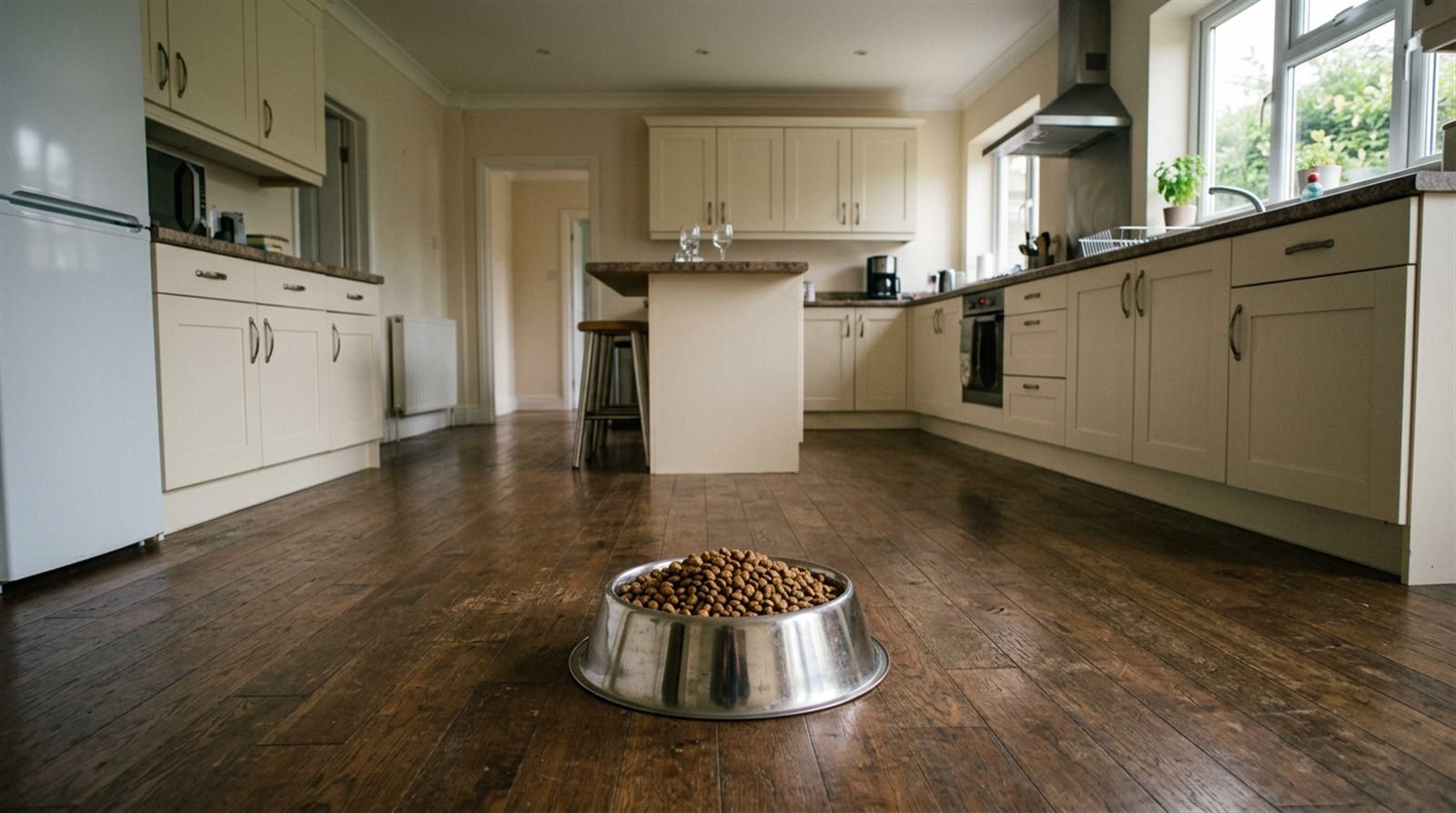
You leave breakfast down. Eight hours later it is exactly where you left it — and then your dog eats the entire bowl in ninety seconds while you stand in the kitchen.
That sequence is not fussiness. It is one of the clearest pieces of information a dog can give you, and it happens to be the same test professionals use.
Appetite is suppressed by stress. A dog that ignores excellent food while alone and then eats it the instant you walk in was not lacking hunger — it was too anxious to eat. Because the test is so simple and so hard to misread, an untouched high-value treat is one of the most reliable indicators of separation distress you can gather without a camera.
Why stress switches off appetite
An animal that believes something is wrong does not digest — it prepares to act. Blood moves away from the gut, the stress response takes over, and eating drops down the list of priorities. It is the same reason people cannot face breakfast before an exam.
This is why the food test works so well. You are not asking your dog a question it can misunderstand. You are reading a physiological response it cannot fake in either direction.
The three-day test
Costs nothing and takes about ten minutes of attention.
- Pick something exceptional. Not kibble. Chicken, cheese, whatever your dog would cross the house for.
- Leave it somewhere obvious as you go out — not hidden in a toy, just plainly available.
- Leave normally. No extended goodbye, nothing you would not usually do.
- Note what you find when you get back. Three separate days.
Reading the result:
- Eaten every time → your dog was relaxed enough to eat. Whatever else is happening, panic probably is not.
- Untouched every time, eaten the moment you return → strong indication of distress. Move on to the camera test.
- Mixed → look for what differs. Longer absences? Certain days? A different door? The variable usually points at the trigger.
- Not eating even when you are home → this is a veterinary question, not a behavioral one. Call your vet.
🩺 When it is medical: a dog that will not eat with you present, that has lost weight, that is vomiting, lethargic or off its water, needs a veterinarian. Refusing food for 24 hours or more warrants a call — sooner for puppies, small breeds, senior dogs and diabetic dogs. Dental pain and nausea are both common and both easy to miss.
What it does not mean
It does not mean your dog is spoiled. A stressed dog will refuse chicken. Preference has nothing to do with it.
It does not mean you should withhold food to force the issue. Hunger does not resolve anxiety; it adds a second problem.
It does not mean free-feeding is the answer. Leaving food down all day removes your ability to run this test at all, and food in a bowl is easy to ignore anyway.
What to do if the test comes back positive
The refusal is a symptom. Fixing it means working on the absence, not the food. Three things in order:
- Confirm with a camera. Two absences, watch the first twenty minutes. That is where distress shows itself.
- Start graded departures. Very short absences that stay below the point of anxiety, extended slowly — the approach in the ASPCA's separation anxiety guidance. For some dogs the starting point is picking up your keys and putting them back down.
- Make the food work harder. A stuffed and frozen toy given at the moment of departure is far more engaging than a bowl, and licking and chewing are self-soothing in a way that eating from a dish is not. If your dog will engage with that but not a bowl, you have found a useful foothold.
The upside nobody mentions
Once you know your dog will not eat while alone, you have a measuring instrument for free.
Every week of work, run the test again. The day the treat is gone when you get home is the day you have proof that something changed — before any of the other signs are obvious enough to notice. In a process where the middle stretch feels like nothing is happening, that is worth a great deal.
Frequently asked questions
Why won't my dog eat when I leave the house?
Appetite shuts down under stress. A dog that ignores high-value food while alone but eats it enthusiastically the moment you return is telling you it was too anxious to eat, not that it was not hungry. It is one of the most reliable indicators of separation distress.
Is it normal for a dog not to eat while alone?
Some dogs simply prefer company at mealtimes and are otherwise entirely relaxed. The concerning version is refusing something exceptional, such as chicken or cheese, and refusing it consistently, particularly alongside pacing, panting or vocalising.
How long can a dog go without eating?
A healthy adult dog can miss a meal without harm, but refusing food for 24 hours or more warrants a call to your veterinarian, and sooner for puppies, small breeds, seniors and diabetic dogs. Complete loss of appetite is a medical sign, not just a behavioral one.
Should I leave food out for my dog while I am at work?
Food left in a bowl is easy to ignore. Food that has to be worked for is far more engaging — a stuffed and frozen toy or a puzzle feeder given at the moment you leave gives the dog something to do during the hardest part of the absence.
Sources
- ASPCA — Separation Anxiety
- ASPCA Professional — Treating Separation Anxiety in Dogs (PDF)
- AAHA — Sample case: canine separation anxiety