Separation Anxiety in Dogs: 9 Signs It Is Not Just Boredom
Advertising disclosure: this article may contain affiliate links. We may earn a commission at no extra cost to you. It never changes our advice. How we fund our work
A chewed cushion tells you almost nothing. The same wreckage can be a bored dog who found something interesting at 11am, or a dog who spent the first twenty minutes of your absence in genuine panic.
The distinction matters because the two need opposite plans. Boredom wants more to do. Panic wants less to cope with — and a stuffed puzzle handed to a panicking dog will sit untouched on the floor, because frightened dogs do not eat.
The reliable difference is timing and recovery. True separation distress builds within the first fifteen to thirty minutes after you leave and the dog cannot switch it off — panting, pacing, drooling, vocalising that does not settle. A bored dog gets into something, then lies down and sleeps. Two recorded absences will tell you which one you have, and it costs nothing to find out.
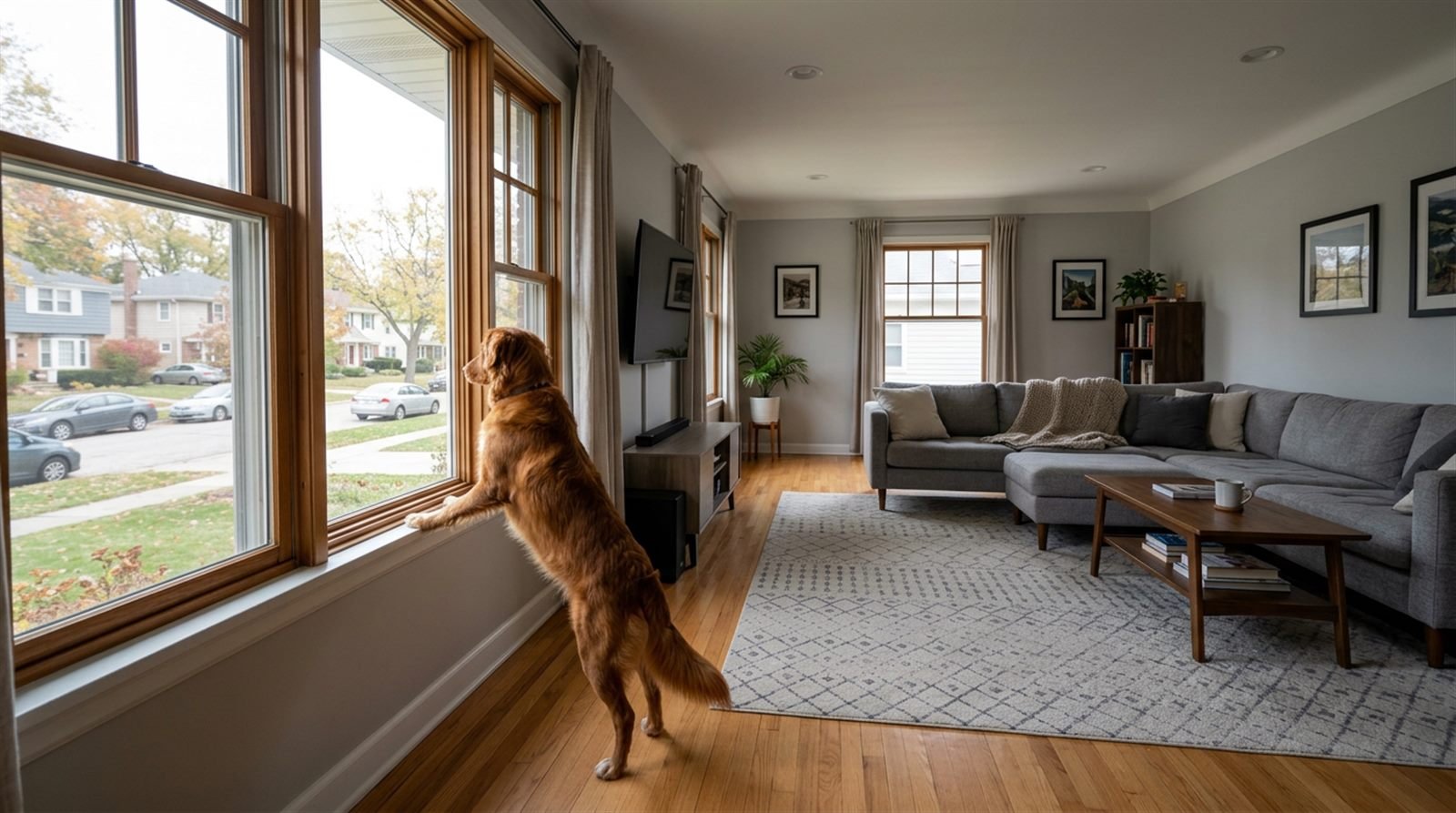
The nine signs worth paying attention to
1. It starts almost immediately
This is the strongest single indicator. Separation distress is front-loaded — the worst of it happens in the first fifteen to thirty minutes. Damage that happens three hours in is far more likely to be boredom.
2. Your dog will not eat while you are gone
Leave a small, high-value treat somewhere obvious as you go out. A dog that is merely alone will take it. A dog in distress will leave it exactly where you put it — and that untouched treat is one of the most useful pieces of information you can collect.
3. The destruction is aimed at exits
Chewed sofa cushions in the middle of the room read as boredom. Scratched doorframes, damaged blinds by the window, chewing at the edge of the front door — that is a dog trying to get out or trying to get to you.
4. There is drool or panting when you get home
A wet chest, damp bedding, or a dog that is panting on a cool day is a body that has been physiologically stressed, not one that has been asleep.
5. Vocalising is sustained, not occasional
A few barks at the mailman is normal. Howling or whining that runs for long stretches with no external trigger is distress. This is usually the sign a neighbor reports before you ever notice it.
6. Your dog shadows you around the house
Following you from room to room, including the bathroom, and becoming alert whenever you stand up. Many dogs like company; a dog that cannot let you out of sight while you are home often struggles most when you are not.
7. The distress starts before you leave
Watch what happens when you pick up your keys, put on shoes, or close a laptop. If your dog is pacing at the shoe stage, it has learned your departure sequence and the anxiety is already running before the door opens.
8. Accidents from a fully house-trained dog
A dog with reliable house training that only has accidents while alone is not being spiteful. Elimination is a common stress response, and it is worth ruling out a medical cause too.
9. The greeting is frantic rather than happy
Almost all dogs are pleased to see you. The one to note is a greeting that takes several minutes to come down from — spinning, jumping, whining, unable to settle — which suggests the arousal has been running the whole time.
The camera test that settles it
Any phone propped against a stack of books will do. You need two absences of about forty-five minutes, on different days, filmed from a spot that shows the door and wherever your dog usually settles.
Leave a treat in shot. Then leave normally — no long goodbye, no special tone of voice, nothing you would not usually do.
Afterwards, watch only the first twenty minutes. That is where the answer lives:
- Boredom: wanders, sniffs, maybe chews something, eats the treat, lies down within ten minutes or so.
- Distress: goes to the door and stays, paces a repeated route, pants with no heat to explain it, vocalises, ignores the treat entirely, never fully settles.
If you see the second pattern, stop shopping for products and read the section below.
What actually helps
For mild cases, the ASPCA's guidance centers on a gradual desensitization program: many short absences that stay below the point of anxiety, extended slowly over weeks of daily sessions. Short means short — for some dogs the starting point is picking up your keys and putting them down again.
Three things support that plan without costing anything:
- Break the departure cues. Pick up your keys and sit down. Put your shoes on and make coffee. Do it enough times that the sequence stops predicting your absence.
- Keep departures and arrivals boring. Not cold — just unremarkable. The emotional send-off you feel obliged to give is confirmation that something big is happening.
- Mask the outside world. Steady background sound covers the hallway noises that keep a home-alone dog on alert.
The ASPCA is explicit that moderate to severe cases need this done carefully, with professional guidance, because pushing past the dog's threshold makes the fear worse rather than better. That is the same principle behind all counterconditioning work.
Two things that usually do not work
Getting a second dog. Separation anxiety is typically about the absence of a specific person, not about solitude. Most owners who try this end up with two dogs in the same situation.
Crating a panicking dog. If your dog is already relaxed in a crate, fine. If not, confinement commonly intensifies distress and is a frequent cause of injuries from escape attempts. A crate is not a solution to panic.
When to call the vet
Book an appointment if the behavior appeared suddenly, if your dog has injured itself, if there is damage to doors or windows, or if several weeks of careful work have produced nothing. Medical causes are common enough that the AAHA behavior guidelines treat a physical exam as part of the workup, not an optional extra.
Two medications are FDA-approved in the United States for canine separation anxiety, prescribed alongside a behavior plan rather than instead of one. For a dog that cannot stay calm long enough to learn anything, that combination is sometimes what makes progress possible.
Frequently asked questions
How do I know if my dog has separation anxiety or is just bored?
Record two absences. True separation distress peaks in the first fifteen to thirty minutes after you leave and involves panting, pacing, drooling or vocalising that the dog cannot switch off. A bored dog explores, chews something, and then usually settles and sleeps.
Can separation anxiety appear suddenly in an adult dog?
Yes, and a sudden onset deserves a veterinary exam before a behavior plan. Pain, sensory decline, cognitive changes in older dogs and other medical conditions can present as new distress when left alone.
Does getting a second dog fix separation anxiety?
Usually not. Separation anxiety in dogs is typically about the absence of a specific person rather than being alone in general, so adding a second dog often produces two dogs in the same situation rather than one calm one.
Is crating a dog with separation anxiety a good idea?
Only if the dog is genuinely relaxed in the crate already. For a dog that panics, confinement commonly makes distress worse and is a frequent cause of self-injury from attempts to escape. Never use a crate to contain panic.
Sources
- ASPCA — Separation Anxiety
- ASPCA Professional — Treating Separation Anxiety in Dogs (PDF)
- AAHA — Sample case: canine separation anxiety
- AVSAB — Position statements